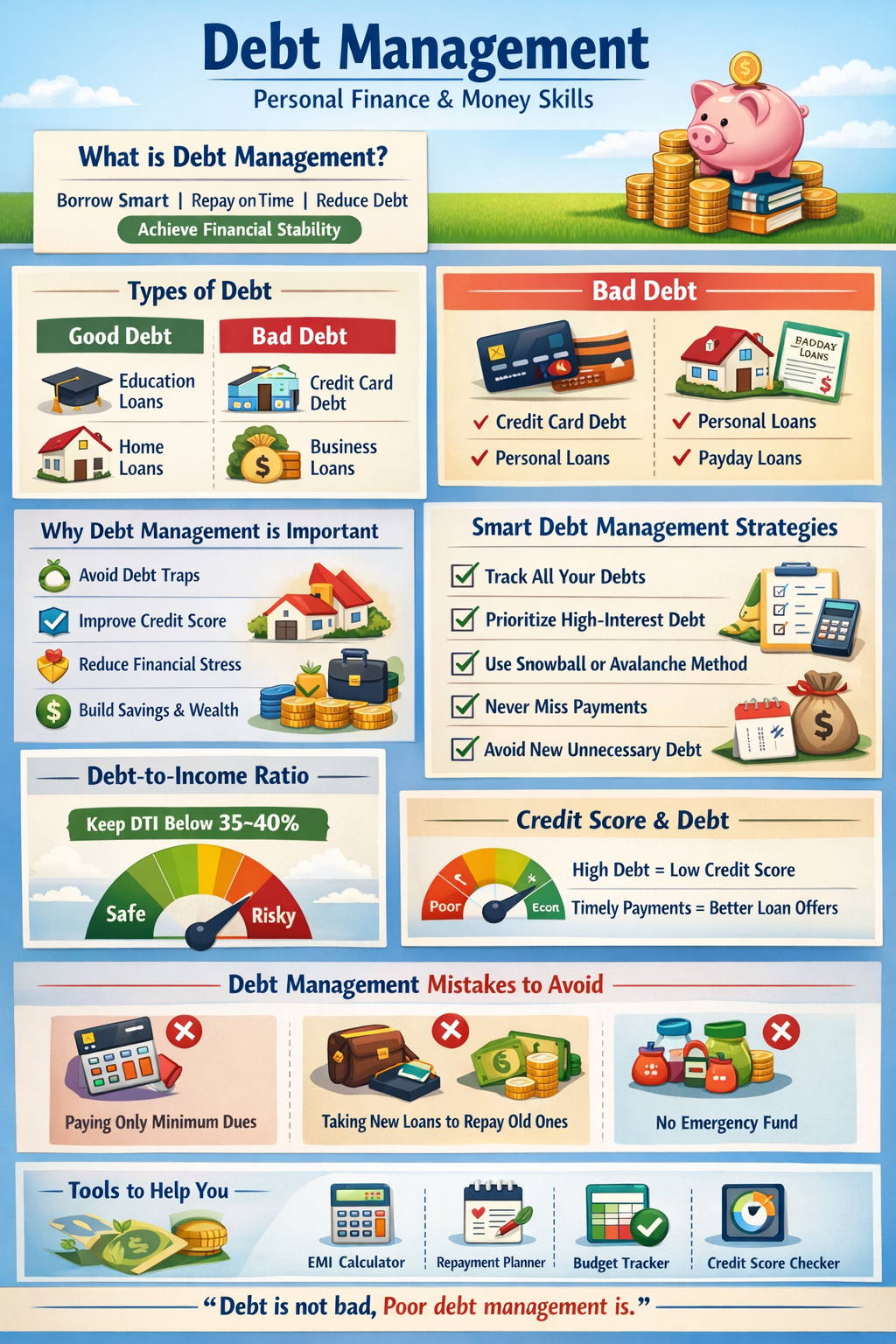
Debt Management (For Personal Finance & Money Skills)
What is Debt Management?
Debt management is the skill of borrowing smartly, repaying on time, and reducing debt without harming your financial stability. It helps individuals avoid financial stress and build long-term wealth.
Types of Debt
1. Good Debt
-
- Education loans
-
- Home loans
-
- Business loans
(Helps increase income or assets)
- Business loans
2. Bad Debt
-
- Credit card debt
-
- Personal loans for lifestyle expenses
-
- Payday loans
-
- (High interest, no long-term value)
Why Debt Management is Important
-
- Prevents debt traps
-
- Improves credit score
-
- Reduces financial stress
-
- Increases savings and investment capacity
-
- Builds financial discipline
Smart Debt Management Strategies
1. Track All Your Debts
List loan amounts, interest rates, EMIs, and due dates.
2. Prioritize High-Interest Debt
Pay off credit cards and personal loans first.
3. Use the Snowball or Avalanche Method
-
- Snowball: Pay smallest debt first (motivation boost)
-
- Avalanche: Pay highest interest first (saves money)
4. Never Miss EMI Payments
Late payments increase interest and damage credit score.
5. Avoid New Unnecessary Debt
Borrow only for needs, not wants.
Debt-to-Income Ratio (DTI)
- A healthy DTI should be below 35–40%.
- If your EMIs cross this limit, your finances become risky.
Credit Score & Debt
- Lower interest rates in the future
- High debt = low credit score
- Timely repayments = better loan offers.